
Create your own cottage style home
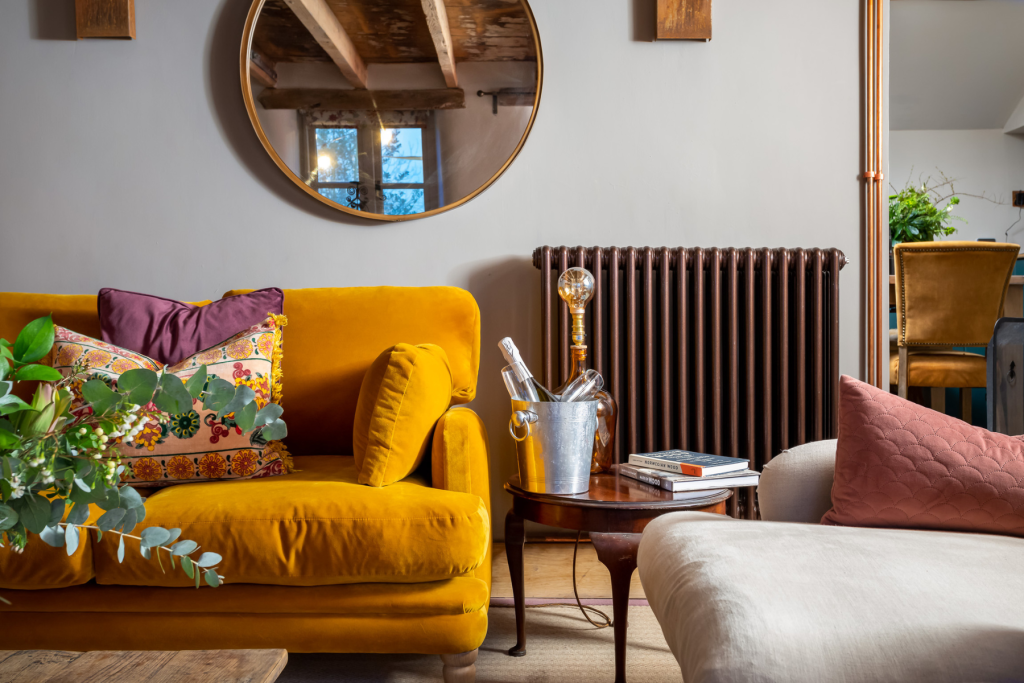
Capturing cottage style
I have been asked by so many of guests and followers about how to re-create a piece of cottage style in their own homes. So I thought it time to share how I go about building my interiors. Touching on features and elements that affect a room, then delving into textures, layering and colour, as well as how to choose, make and collect the right pieces to create your own cottage style wherever you live.

A space that reflect you
It pays to fashion your home to reflect you, your likes, interests and passions. The essence of cottage style is that rooms have evolved over time, with a mix of unique, often handmade pieces, alongside practical application, and decor that reflects its place.
Cottage style is eclectic, working best if collected over time from different sources. I know we all want the finished space as quickly as possible, but leave room for the additions you will make as you live your life and make new memories.
A few examples of how to get that old / new mix are, finding a new cushion that compliments an old throw, or salvaging an old vase at a flea market and adding a posy of flowers using a new lamp but finding an old shade or one with a vintage feel. Choosing 'art' that holds meaning to you, such as a painting you bought on your travels, or a sketch of a loved one, or little pieces of memorabilia that reminds you of a special moment. It might be a mirror from a second hand shop or carved panel you salvaged. Maybe fabric collections or hats. It doesn't really matter- If it has some meaning to you then it provides a history and context of your home, cottage or not!
It is that curated and slightly random mix of interiors that speaks of authenticity, age and a lived in quality that feels comfortable, practical and loved. Nods to nature are big element of cottage style such as pressed flowers, botanical prints, indoor plants and flowers which all add to a sense of place, regardless of where you live and the style of your home.

Start with the bones of your space
I tend to start with what I refer to as the 'Elements' and features of a home that impact it. Elements like light and how it moves around your home, throws shaddows and created light and darker spaces. . Sounds are very evocative too , like traffic or trains, children playing at a local school, or wind rustling through trees or waves on the shore. Some you may want to mask, others you'd prefer to highlight, and these noises can alter through the day.
Your views are a big part of the space you inhabit. We often think of what we see through the windows, like landscapes, rooftops, buildings - but we can mask and affect our view with decor, furnishings, displays and plants this side of the glass too.
Features are often thought of as being found in older homes, but any space has its own features defined by size of rooms and openings and connectivity to other spaces. Height, and slope of ceilings, windows style, fireplaces, and finishes on walls and floors. These all impact the feel of a place.
For every property this mix of features and elements will change how it feels. Elsie's cottage is surrounded by green, it has a south facing terrace and lounge, but with a dark north facing kitchen side. Birdsong and fauna are part of its setting. It is built of Malvern stone with a massive inglenook fireplace, oak beams and quarry tiled floors. The new extension we added is square, plastered with straight walls and higher ceilings. Yet the new addition is still impacted by its setting, so the colours and styling works, despite it being new. Adding a darker wood floor and rustic elements into the room hint at its setting and connect the spaces.
Task:
- Take a moment to jot down all the external elements which impact your property.
- How does the sun move around your house at different times of the day?
- Consider your view (s).
It's all about the feel
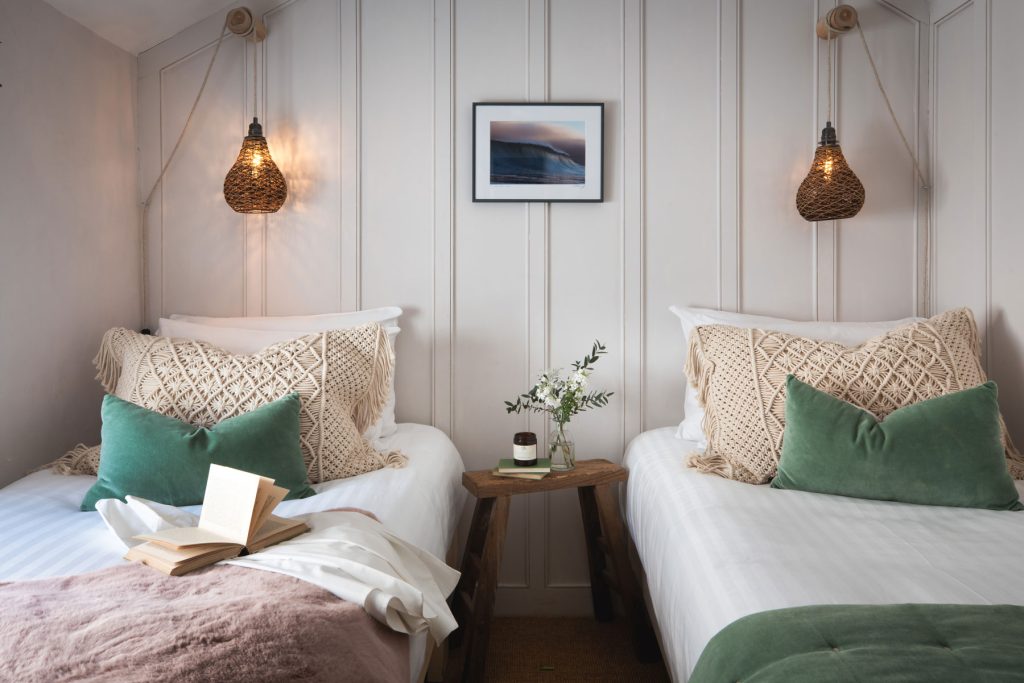
Texture plays a big part in the feel of older homes that aren;t sleek and seamless, but have edges and a mix of wall and floor finishes. Usually beccause they have been added to over time. Texture stimulates our senses, encourages us to linger visually or touch and feel surfaces.
Textures also impacts noise - spaces with hard surfaces can make a space echo, whilst soft furnishings, or many different finishes can dampen that effect. Wood, plaster and stone together add interest and many textures. Adding wood floor to a plastered room, or panelling on hte walls for example can break up the flat feel of a fully plastered room. Textured wallpaper or paintings and wall hangings could achieve the same effect.
Look a little closer at the elements and textures in the rooms you like to spend time in, these maybe a cafe or friends home. It could be a shop or hotel room, cabin or stately home you've seen an image of. Look at the different finishes used in the room, paint, panelling and Or textures used on floors like wood, stone, tiles and rugs. Is wallpaper or fabric, paint or plasterwork on the walls? Widen the net to include cabins and stately homes. Don't think in terms of replicating the look, but pick the elements in the look, like lighting, textures and wall finish that you like.
From these which could you use in your home? Rugs, wall hangings and these days panelling too, are easy to add to your walls and floors to add texture and interest.

Creating the eclectic look
You might hear many an interior designer talk about layers. The most common layering we think of is clothing. Many of us have learnt that mixing colour and texture works well when dressing ourselves. So it makes sense when dressing a room we do the same.
Layers are not just physical things but also the more ephemeral elements such as lighting, warmth noises, smells, colours, form and flow.
Layering as we now call it, is a natural interior style in cottages, driven largely out of practicality. A cushion on a sagging sofa, or a blanket for chillier evenings. Candles where you have no light (or plugs). Rugs to soften hard floors, curtains and blinds to keep the drafts at bay. In the same way we can use these masking elements for practical reasons in your home today, it might be for different reasons, blinds and curtains to mask a view, cushions to add interest or wallhangings to add interest rather than hide an uneven wall. Whatever the reason, the same techniques work.
Personally I am not a huge fan of buying stuff for the sake of it. I prefer to curate the pieces I choose over time, considering items that offer new texture or pattern, interest or draw my eye away or towards a feature in the room. I'd encourage you yo go foraging for your meaningful items in your own home, we all have albums of photo's and old handmade items or inheritaed vase or pot we could display - which all adds to the eclectic look but also adds the all important personal meaning for your home. Use your decor to shed some light and love on things that have meaning to you and your family.

Setting the tone
Ah, the conundrum of picking the perfect colour. Why is it that we often love a colour on someone else's wall but hate it on our own?
So how do we get it right. Well I haven't the answer to this but I do have some tips from having decorated my own homes.
Tone is as important as colour. Choosing tones in a similar range that compliment means that colurs aren;t fighting one another. I tend to start with the right neutrals for a space. This will largely be driven by the light and landscape it reflects as well as your taste.
I tend pick pale greys as my neutral. Yet the same neutral will not work in my Worcestershire home as in Cornwall. The light reflected off a blue of the sea will work differently off walls than the light reflected off green fauna and trees. A distant horizon gives a sense of a big sky in Cornwall, which gives more light.
My choice of grey neutrals rather than creams, is personal and works best with the light in my homes. It also compliments well with the tones of other colours I like such as a dirty pink, mustard or petrol blue. It depends so much on the statement colours you are drawn to, as to which neutral work best.
In terms of depth of colour, don't be tempted to fight nature. If you have a north facing dark space, embrace it. Lean into the feel of dark, evoking cozy offering a retreat to retire to, or escape a blazing sun. In our Cornish house the depth of dark is far less that in our Worcestershire homes. The contrast feels too great, and the shaddows more distinct where there is more sun.
If you have rough walls, as is often the case in cottages, darker or less stark tones along with matt finishes are more forgiving. Bright white or satin finishes will highlight the uneven finish of the plasterwork. Brilliant white has a blueish quality - so choose your white carefully.
A great deal of what works on walls is how you pull together the different elements of a room. Pattern and texture can be the key to this. A hint of the wall colour in a fabric, or in a rug or on a throw. Maybe pulling the two or three colours in the room from the wood floor, to paint colours and wall textures will make a room feel cohesive rather than random.
I love this part of interiors. Finding the thread which pulls it all together is really magical. Allow yourself a little time to find theright fabric for a cushion on the sofa or lampshade, a throw or rug, these pieces can pull a look together. They can also change the feel and balance of a room too. In darker months I may draw off deeper tones to dress the space, whereas in summer months highlight brighter tones to bring a fresher feel.
Getting the tones of your home right, allows you to alter it for the times of the year, events and celebrations. No home is static or finished, it is evolving and being shaped by you and your life in it. Which personally I find hugely liberating as well as exciting, because I can keep adding and editing my homes, keeping them alive and interesting for me, my family and my guests.